While taxes have been part of the human condition for about 5,000 years, they rarely appear in fantasy games. Why not? Unfair taxes can be a powerful motivator, such as in the Robin Hood tales. As player characters (PCs) gain political positions and build strongholds, they are likely to be funded through taxes and may use these funds for the community’s benefit… or for their own profit. Let’s explore how taxes might be introduced into your fantasy tabletop roleplaying campaign.
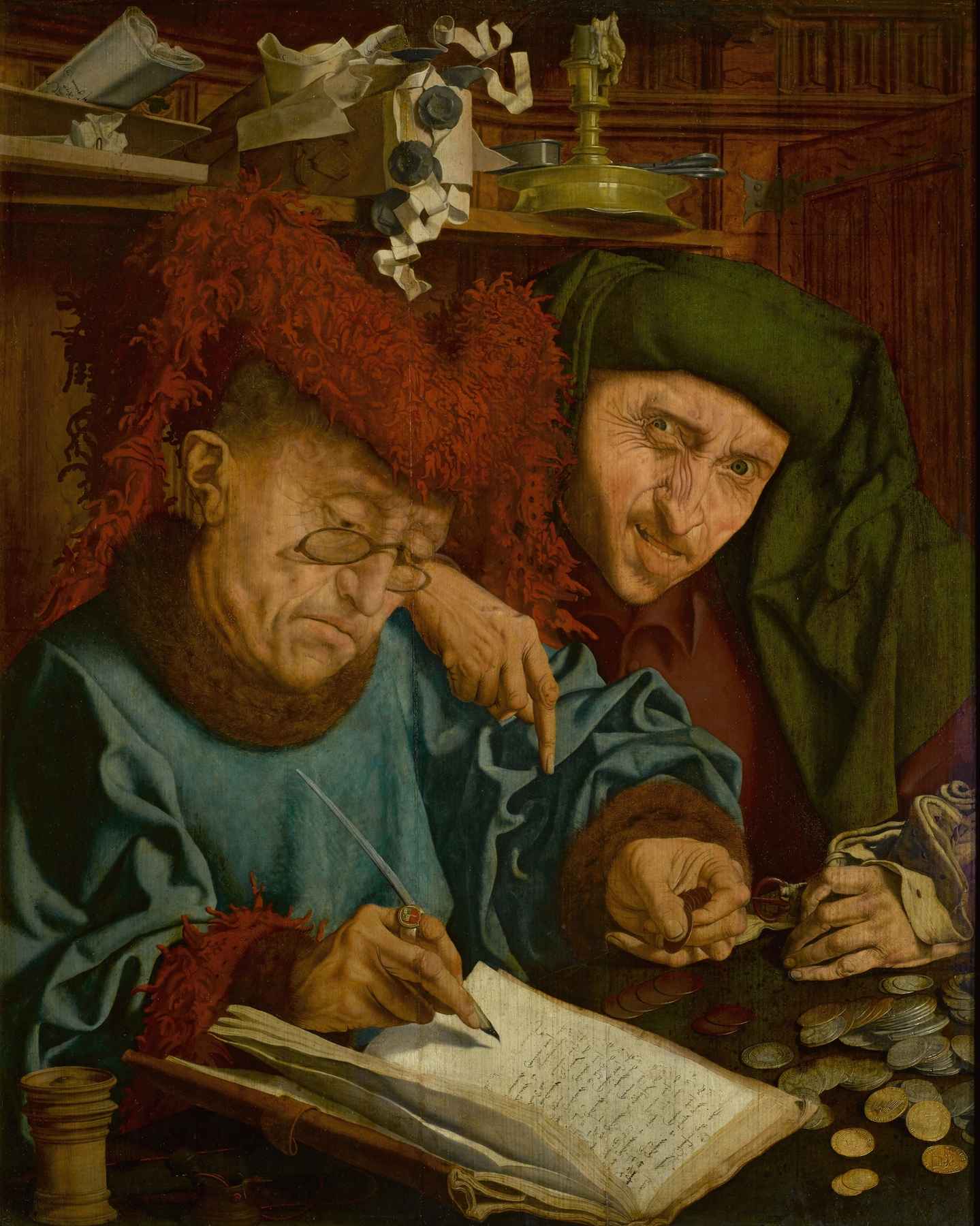
"Tax Collectors" by Marinus Van Reymerswale (Dutch, c. 1490 – c. 1546). Public domain. (Source)
In the early medieval period, the idea that the “national” government should receive regular tax payments was not widely accepted. Instead, the government typically only collected “extraordinary” taxes to pay for wars and ransoms and similar events. Rulers supported themselves through their own assets. The ruler also charged fees for certain routine responsibilities, such as granting knighthoods and marriages, or permits, such as fishing in the ocean.
Taxpayers were often expected to supply labor to their leaders for a certain number of days, but they had the option to pay money instead of working. Regular taxes were more frequently at the local level, rather than the national level, and tied to land productivity. Tax avoidance is more difficult when taxes are tied to “immovable” objects like land, buildings, and livestock than, say, jewelry or artwork which can be quickly hidden from the tax inspectors.
Over time, as the role of the national government grew, armies and navies gained a permanent presence and nations built more public goods, the acceptance of broad-based and regular taxation grew. Many roleplaying settings feature public goods that were not seen in Medieval Europe, such as extensive city guards, roads, and sewers. All of these require funding, which suggests roleplaying cities should have far higher taxation than typical European medieval cities.
Tax assessments were typically scheduled near harvest time so tax evaders would have a more difficult time hiding assets. Assessors tended to be agents of the national government since even local officials working for the king, like the sheriff, were too susceptible to corruption. Since many groups received exemptions from taxation, the government often needed to rework taxes so exemptions granted earlier would no longer apply. Or, the government may take more extreme options such as Henry VIII did with the monasteries.
Auditors might use Zone of Truth or similar lie-detecting magic to detect tax evasion. The one-sided nature of these spells will likely provoke outrage from their subjects. The gods may also dislike being dragged into everyday civil matters.
Punatively, gamemasters can use taxes to reduce the party’s spending money. Since adventuring parties are less likely to have wealth tied up in fields of grain and hordes of cattle, the government could target them with luxury taxes on magical goods and fees for going armed.
Story hooks:
- The PCs are recruited to act as tax assessors (perhaps being given a choice between temporary service or paying a heavy tax) and sent to a rebellious province. (This job could also be part of adopting control of a province, perhaps as a part of earning a “name level” or stronghold.) The local authorities oppose the PCs through deceit, obstruction, and elimination.
- The local rulers are jealous of the PC’s adventuring successes and acclaim. They insist that adventuring falls under privateering. If the PCs are privateers, they both owe a percentage of their profits to the local rulers and all confiscated treasure needs to be approved by the rulers. If the treasure is not approved, it is forfeited to the government. Will the PCs prefer revolt to working under these terms?
- The crisis is over! The PCs and the army have thwarted an invasion. Now, the army needs to be paid, the province rebuilt, and the PCs given their award. However, the rulers are bankrupt and can’t pay, leading the army to banditry and the population to starve. The rulers could try a confiscatory war tax to pay for everything, but will the PCs go along or work to find another solution?
